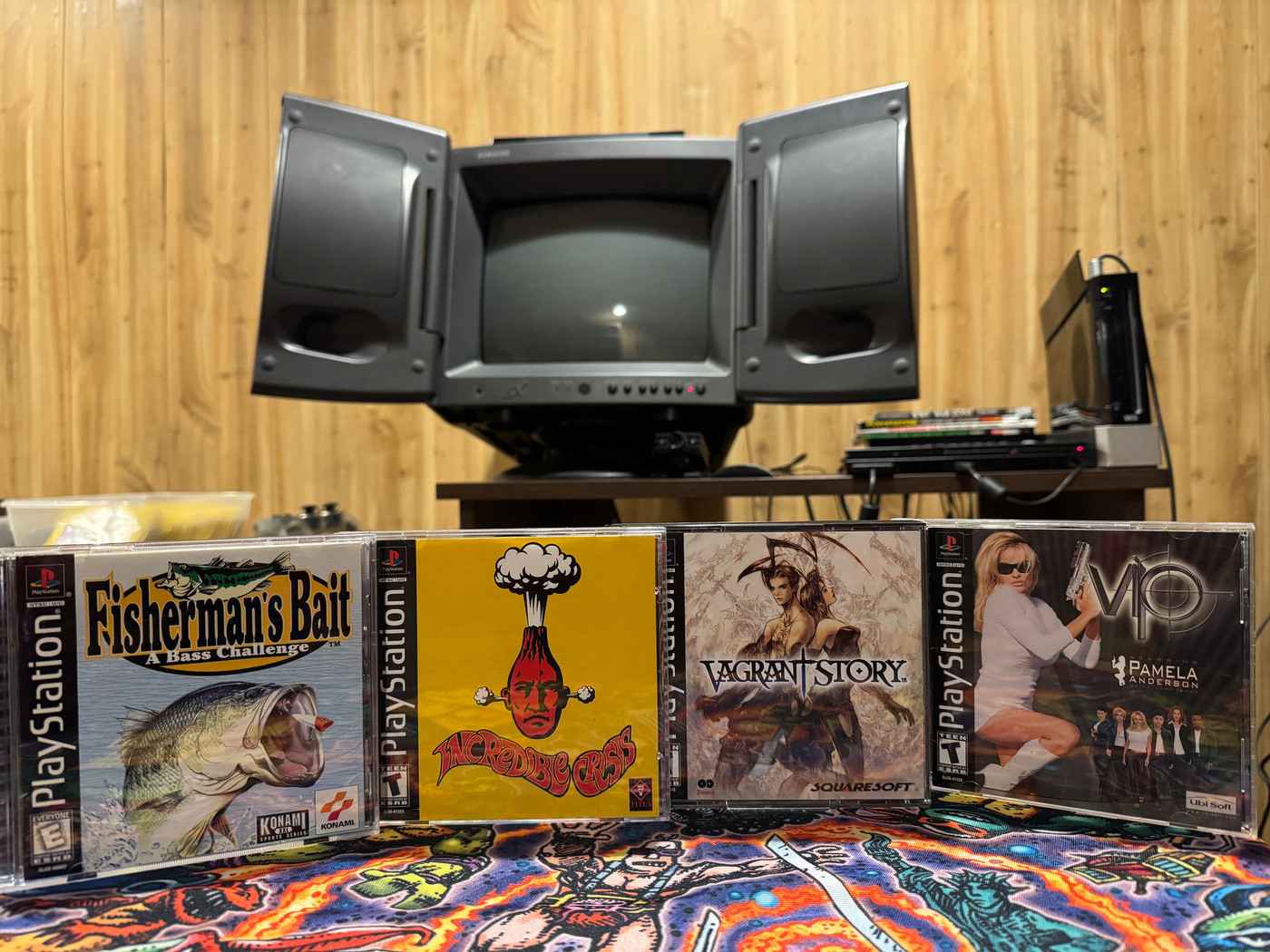
My experience with Golden Tee Golf really ran through bowling alleys and bars, back when I was an active bowler and karaoke singer/show host. I’d put in 18 holes before League Night started, or during karaoke nights after sound check as a host, or when it was busy as a singer. Looking back, I don’t think I want to consider just how many hundreds of dollars I pumped into these machines over the course of near a decade… though I’d be fibbing if I said that I wasn’t having fun at the time.
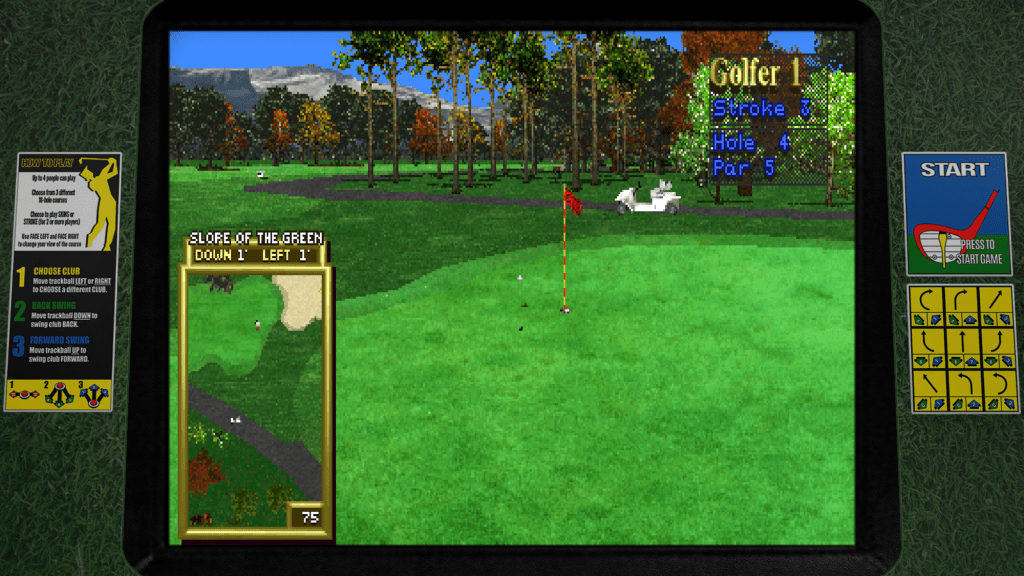
The keys to Golden Tee‘s appeal are its simple approach to the game and course designs that go hard into “Risk vs. Reward” territory. Incredible Technologies, the developers of the Golden Tee games, utilize the track ball controller in such a way that force and spin path allow for easy shot shaping and adjustable power. With a wide and long fairway, players can rip drives of 300+ yards off the tee by drawing the track ball straight back and then slamming it straight forward, with a south-to-north motion. Fairways with doglegs or that feature trees in the path of the green require more precision based on how players draw the track ball back and then forward. With practice, players can execute crazy shots around trees, cacti, or water hazards to shave shots and hunt greens.
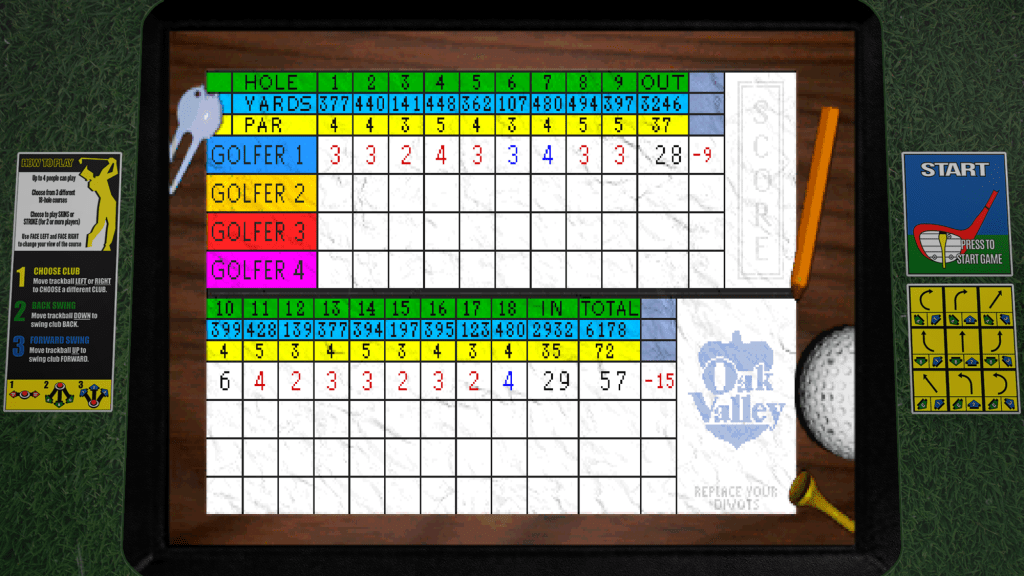
The course layouts dare players to take risky shortcuts to shoot low scores. Looking at almost every Par 4 or Par 5 hole, there seems to be an ideal path to eagles or better… but these require not only near-perfect shots, but also sometimes a bit of help from the seemingly omnipresent wind. If players execute, seemingly unthinkable low scores (-20 or better) are common. If not? Eagles become triple-bogeys or worse. Even one bad hole can be the difference between a record-setting round and a facepalmer.
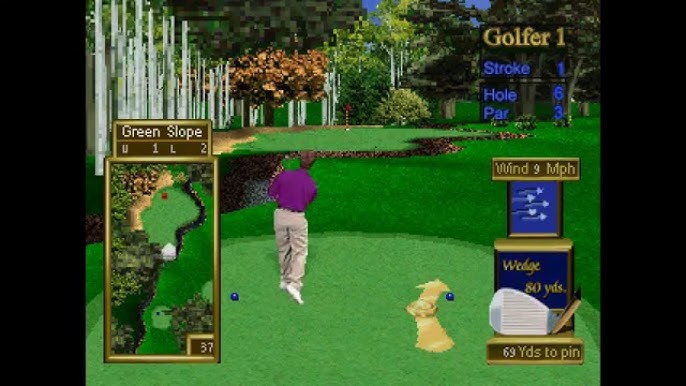
For home consoles, we only saw one Golden Tee game for the longest time. Released for the original PlayStation in September of 2000, Peter Jacobsen’s Golden Tee Golf is a port of Golden Tee ’97 with a trio of additional courses and a few extra modes of play. The game uses both digital and (for those who had them) Dual Shock analog controls for swing mechanics. Neither of these control methods are great at simulating what a track ball can do, but players can adapt with practice. The game is fine for what it is, and it doesn’t command a ton of money ($15 or so complete) if you’d like to check it out for yourself.
There were standalone Golden Tee Golf home experiences for awhile after the release of the PlayStation game, culminating with the release of an Arcade 1UP cabinet. The cabinet has a track ball controller, just like the coin-operated cabinets of old use, making it as close to the original experience as possible. At over $600, though, this cabinet is more for the arcade aficionado than for the casual player. While there’s a lot of value in having multiple versions of Golden Tee in one cabinet, it’s not easy to part with that kind of cash for one game.
In the spring of 2025, seemingly out of nowhere, Atari announced Golden Tee Arcade Classics— basically a console version of the Arcade 1UP cabinet. Like the cabinet, six Golden Tee Golf games would be included in this release, as well as two tangentially related games in World Class Bowling and Shuffleshot. I was all in on this release, preordering the physical Switch version and buying the digital releases for both Switch and XBox Series X. There’s only a couple of Xbox Achievements I have left, but I’ve put in about 15 hours on the Xbox version and another 4 on the Switch version.
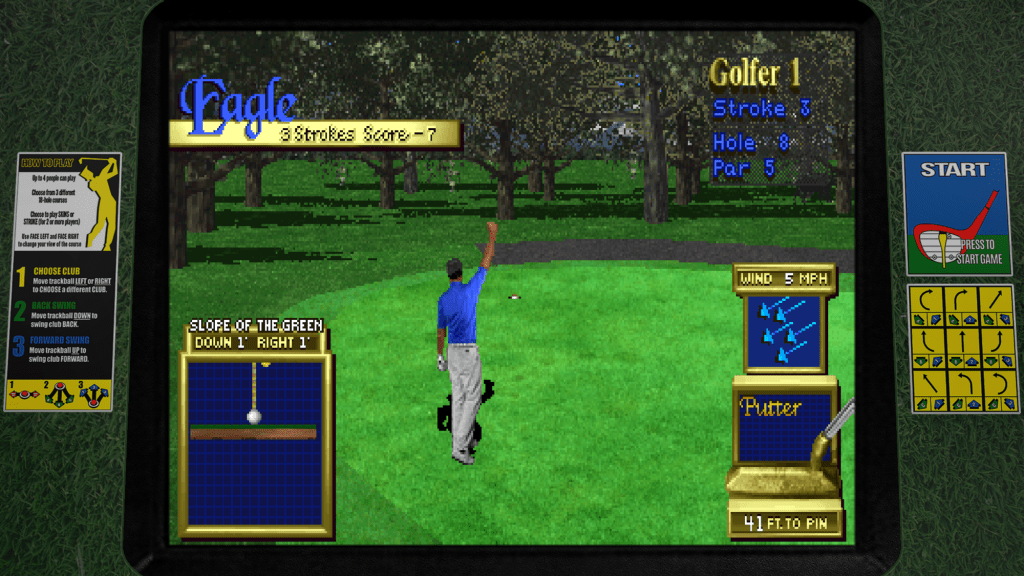
The play controls in Golden Tee Arcade Classics are still imperfect, though better than the PlayStation version from 2000 in some ways. Analog controls provide a bit more control here, and the simulated feel of drawing the “virtual” track ball back and forward often works well– especially off the tee and during putting. The problem here, at least in terms of using a controller, is short approach shots. It is quite difficult to find the power increment in the backswing to hit shots between 20-50 yards, leading to flying the green or short-arming shots. Of course, if you’re hitting the right shots, you’re hitting the green with a long approach and this complaint is generally moot… but it’s still worth mentioning as the only major flaw.
Now, in the spring of 2026, I’m still playing Golden Tee Arcade Classics fairly often. It’s not an every day or every week play, but it’s solidly in my rotation of games to play when I have a little bit of time– like when dinner is cooking or while laundry is running. It takes less than 30 minutes to play a round of 18 holes, and I’m always gunning for new personal bests. It’s fun for me to check leaderboards, see my past rounds, and try to either match or exceed those. The Golden Tee games, at their core, are arcade games– meant to be played in short bursts and not marathoned. With this approach, for me, at least… there’s almost infinite replay value. It feels like there’s always a few holes that I can attack differently to shoot lower scores, and then it’s about seeing my initials next to all of the course records.
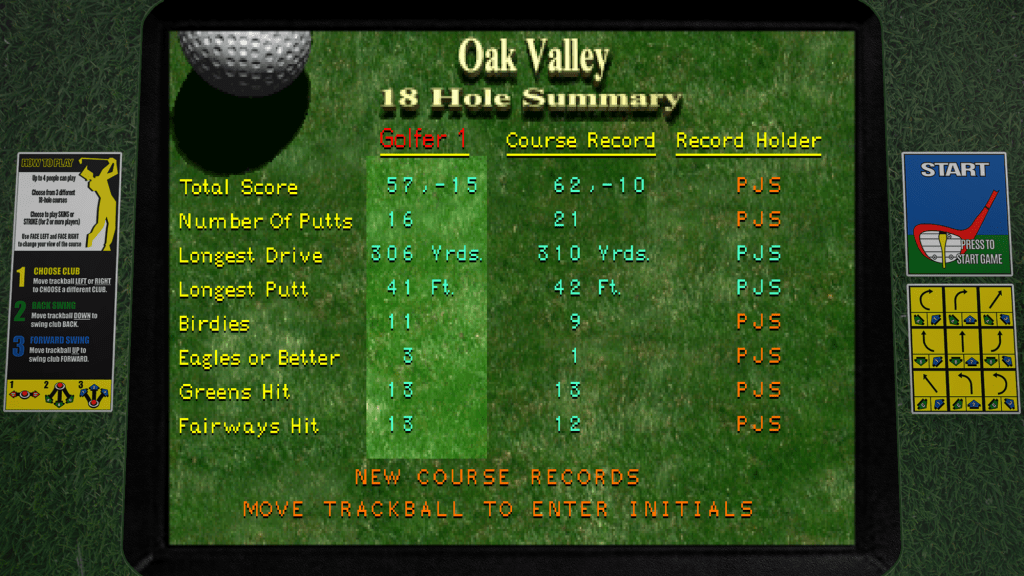
Golden Tee Arcade Classics tends to go on sale rather often, recently selling physically for just $15 at several locations. Even if golf isn’t your thing, this is Golden Tee— far from a stuffy golf sim. The game wants you to score well. I would love this game as a fan of sports video games anyway… but the– ahem– approach here is a lot more friendly to casual players. Maybe it can take its place among your own list of Ones like it has for me.
 Pete's Perspective
What say you? Share a comment.