It’s late January in 2001.
While checking in on the GameSpot forums, there’s a good amount of chatter about something huge: SEGA was rumored to be dumping Dreamcast and getting out of the hardware business.
It was just chatter, but something about this felt… different. The Dreamcast had lost its exclusive edge on being the only new-generation console on the market, as the PlayStation 2 had been literally selling out shipments the same day they arrived in stores for months… and it was still happening after the hustle and bustle of the 2000 holiday season had ebbed away. Could SEGA really stand against the Sony juggernaut again?
This chatter sent me on a speedrun through the Kübler-Ross grief model. But, wait. How did I get here?
See, in 1999, I wasn’t at all a SEGA guy. In fact, I had sworn off SEGA years earlier after feeling burned by the 32X and feeling a bit disappointed by the SEGA CD. I was an original PlayStation guy in 1995, completely ignoring the Saturn— a decision that proved to be a good one given that the Saturn had an abbreviated run here in the US after a series of stunningly poor business decisions. I wound up getting a Nintendo 64 in 1996 to complement the PlayStation, but was fine with SEGA going back to arcades… where I thought it was best.
Then, during the springtime months of 1999, a friend of mine who ran a small number of independent video game stores called Fantasy Realms pulled me aside during a visit to his store in West Springfield, Massachusetts and told me that he had to show me something. This was the same guy, by the way, who introduced me to the PlayStation months before its release… so when we wanted to show me things, I tended to listen. He popped a disc into this new console he got in, and told me that I’d love this… but then I saw the SEGA logo.
“Just wait a minute,” he told me as I started to squirm in my chair.
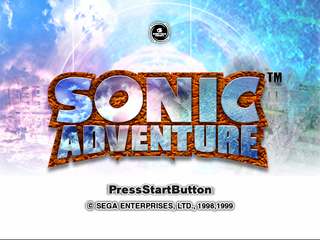
When Sonic Adventure booted up, it wasn’t long before my bias started to melt away. The music was great, the graphics were crazy good, and… was I having fun playing? Yeah. I couldn’t deny it.
He did it to me again.
And the news was good. Dreamcast was going to get support from Midway, Namco, Konami, and others. The launch window games pressed all the right buttons for me, with plenty of arcade goodness mixed in with some original stuff. And the 2K sports games looked tight.
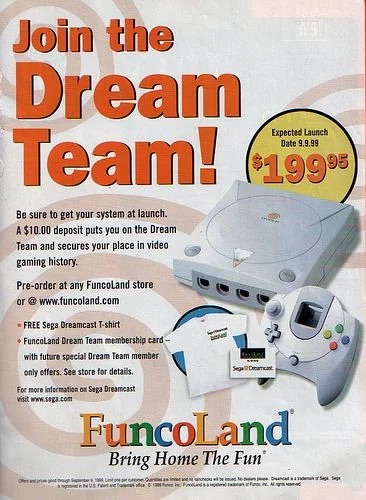
So I went all in on Dreamcast. Like… more than $700 in 1999 money. I preordered so much stuff— the console, some VMUs, an extra controller, and an unusually large number of launch games. My FuncoLand employee discount helped a little, but it was more paying a little every week and trading in a ton of stuff. I was as committed as I could be, and I happily spread the gospel of Dreamcast to customers in my FuncoLand store. Yeah, the PlayStation 2 loomed large on the distant horizon, but Dreamcast was a lot closer and sure seemed competitive.
For the next 15 months, even as I had moved on from video game retail and was struggling to find a new career path, video game life was so good. Dreamcast and PlayStation were getting as much gaming time as I could spare, and I felt like I didn’t have time or room for the incoming PlayStation 2. I thought I’d let the launch hype settle a bit and maybe jump in once the original PlayStation was done.
This brings us back to late January of 2001. The chatter. The grief steps. Was this really it for Dreamcast, less than 2 years after launch? How could this be? Even with nothing confirmed, it all felt real. Inevitable.
And I was angry. It felt like I’d been, if you’ll pardon the Marvel vs. Capcom 2 pun, “taken for a ride”. I had dropped so much money on Dreamcast, only for it to be a dead console. I could’ve saved that money and dropped it on a PlayStation 2!
Wait. That was it! What if I traded in my Dreamcast stuff now, before anything official is announced and values tank? If I’m lucky, maybe there will be a PlayStation 2 in stock and I can make the move without spending more money.
So I packed it all up. The games, the accessories, the console in the box. I called the Fantasy Realms store and asked if a PlayStation 2 was available. The owner knew my voice and said that there was one. He promised to hold it for me, and I sped off to the store.
“What? You’re getting rid of your Dreamcast stuff? What’s going on?”
I couldn’t be honest. First, nothing was confirmed. Second, if I spilled the beans, it might have affected the value of the stuff I brought.
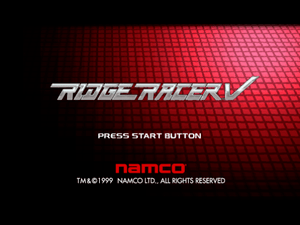
I poked around and looked for PlayStation 2 games. SSX. Madden 2001. NHL 2001. Ridge Racer V. Swing Away Golf. In the end, I think I paid $20 or so on top of my trade in for all of those games, two memory cards, and a brand new PlayStation 2 console.
Sure enough, a few days later, on January 31st, 2001… the news broke.
The message board chatter was verified. Dreamcast was being killed off, and SEGA was exiting the console hardware business in favor of developing and publishing games as a third party.
SEGA’s killing of the Dreamcast is still debated and argued about today. Fingers are pointed at Sony, at SEGA, and even at people who bought video games back then. I won’t pretend to have a definitive answer about why it happened or who is to blame. What I do know is that I still find myself harboring a bit of resentment toward SEGA for selling a bill of goods with a rapid expiration date. It’s resentment that really doesn’t matter much in the grand scheme of things, but more about bitter memories of picking the wrong horse to bet on all those years ago.
Obviously, a lot has changed in 25 years. Fantasy Realms and FuncoLand are distant memories. Message boards have been replaced by social media and live streams of consciousness, where news breaks seemingly every minute. We’re more than five years into the PlayStation 5 life cycle as I write this, while the PlayStation 2 is considered “retro” in at least some circles.
What hasn’t changed is that SEGA is still making and publishing games as a third-party, as they set out to do a quarter of a century ago. Seeing Sonic and Mario together isn’t shocking anymore; it’s commonplace. The company did what it needed to do in order to keep going. I don’t have to like it to get it.
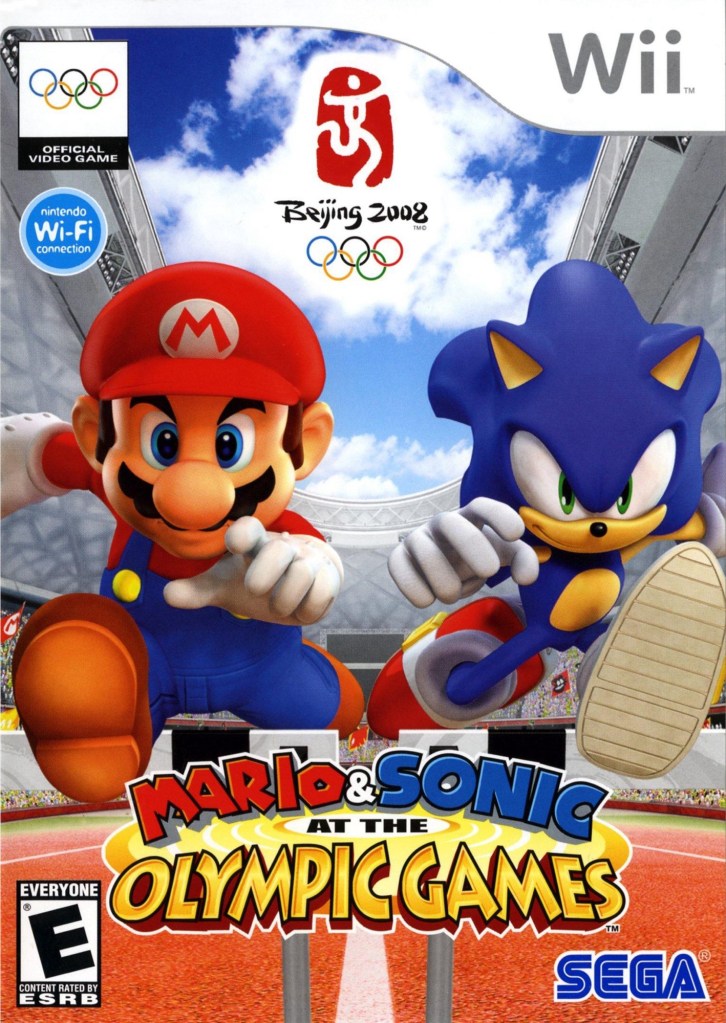
It’s hard to believe it’s been 25 years. It’s been one heck of a ride.
 Pete's Perspective
What say you? Share a comment.